Rust: From Zero to Hero
Welcome! This interactive online book is your comprehensive guide to mastering the Rust programming language. Whether you are a complete novice taking your first steps into the world of code or a developer looking to solidify your Rust skills, this resource is crafted for you.
For a weekly TL;DR of new AI models, papers, and dev tools, you can also follow this Zaap link hub and the Notion doc.
This week on Pomegra: traders are circling Reddit (RDDT) Q1 print; here’s the rundown; Alphabet cloud growth: what filings and price action imply; deeper context around crude over $111 drivers.
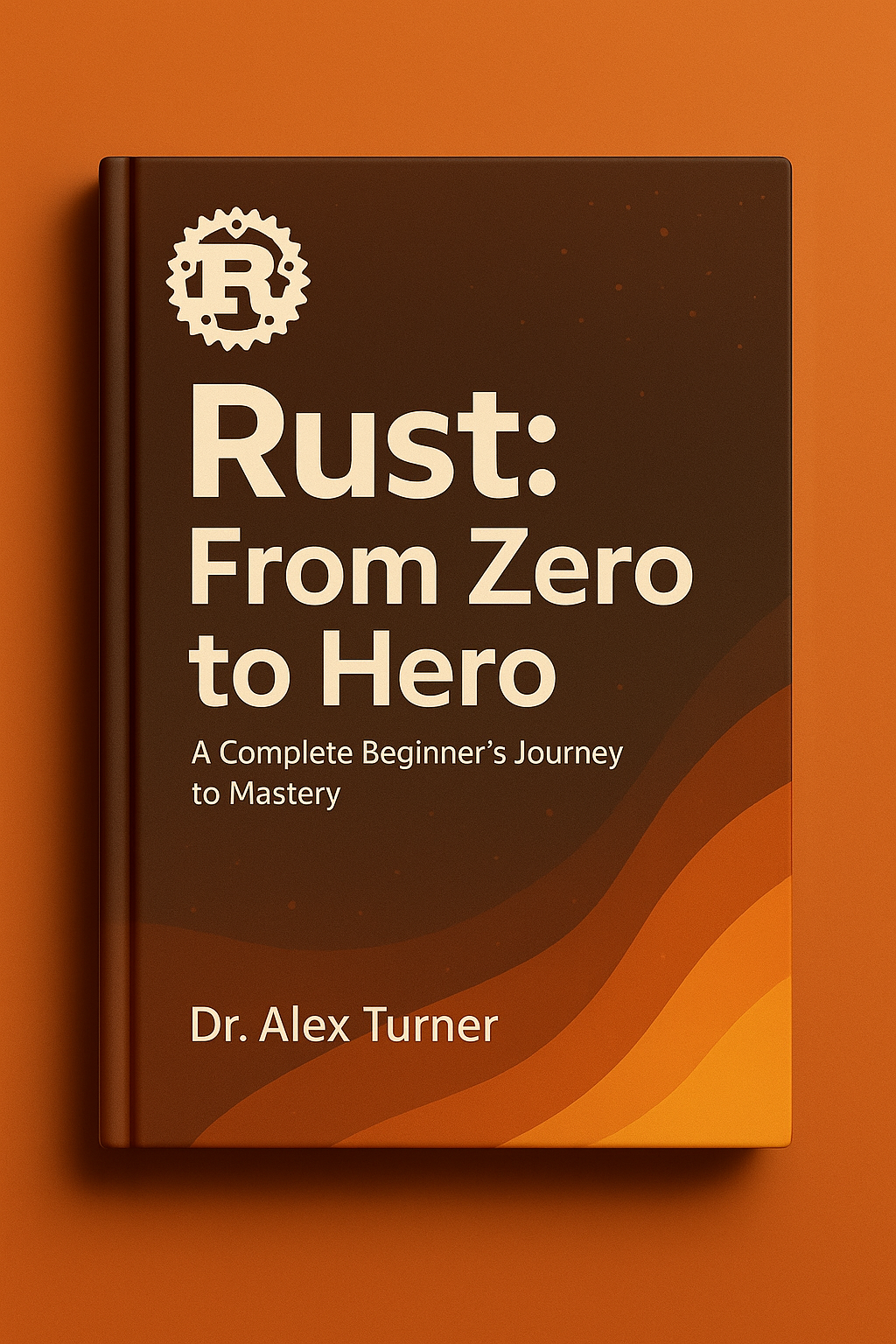
Go from Zero to Building Real-World Applications
This isn't just another syntax guide. It's a hands-on, project-based journey designed to make you a proficient Rust developer. You'll start with the fundamentals and progressively build your skills to create impressive, real-world applications.
What You'll Build:
- 🌐High-performance Web Services with Actix/Rocket
- ⚡️Blazingly Fast Command-Line Tools
- 🦀Safe and Concurrent Systems Software
Share this book:




How to work through this book
- Follow the sidebar order — lessons reference earlier concepts; skipping ahead works best after skimming prerequisites.
- Type the examples — cargo errors will feel terse at first; they become precise pointers once ownership clicks.
- Finish the mini-projects — calculators, guessing games, and APIs consolidate patterns prose alone cannot.
- Circle back — revisit ownership after generics and async; deeper sections deliberately revisit fundamentals.
About the Author
Hello, I'm Dr. Alex Turner. It's a pleasure to guide you on this journey into the world of Rust.
My path has been a winding one, from earning a Ph.D. in Human-Computer Interaction at MIT to building large-scale systems in the tech industry. Throughout my time in both academia and the corporate world, I noticed a recurring theme: the most powerful ideas were often locked away behind complex jargon and steep learning curves. I felt a growing conviction that it didn't have to be this way.
My true passion isn't just in using technology, but in demystifying it. I believe that learning to code should be an empowering and accessible experience for everyone, regardless of their background. This book is my humble attempt to do just that—to break down the barriers and share the joy of programming in a way that is clear, practical, and, I hope, inspiring.
My goal is simple: to provide you with the tools and confidence to build amazing things. Thank you for allowing me to be a part of your learning adventure.
📚 Table of Contents
This guide is structured to build your intuition as a programmer. We'll start with foundational concepts and progressively layer on new skills, ensuring you understand not just the what, but the why behind each line of code.
Chapter 1: 🦀 The Absolute Basics
Every great journey starts with a single step. Here, we'll lay the groundwork, exploring Rust's philosophy, setting up your environment, and diving into core syntax, data types, and control flow to build a solid foundation.
- Series 1: What is Rust? - Understand the fundamentals of Rust, its history, and why it's so popular.
- Series 4: Control Flow - Learn how to make decisions in your code with
ifandmatch.
Chapter 2: ⚙️ Ownership, Structs, and Error Handling in Rust
Now that you have the basics, it's time to understand Rust's soul. This chapter is about memory safety and code organization. You'll learn about the ownership system, how to create your own types with structs and enums, and how to handle errors gracefully.
- Series 6: Defining and Using Structs - Master the art of creating your own custom data types.
- Series 8: The Ownership System and Borrowing - Learn about Rust's most unique feature and how it guarantees memory safety.
Chapter 3: 🧠 Advanced Rust Concepts
Let's explore some of Rust's more advanced features. We'll demystify generics, traits, and lifetimes, and see how they enable you to write flexible and reusable code.
- Series 9: Generic Types, Traits, and Lifetimes - Write code that works with multiple data types.
- Series 12: Concurrency in Rust - Learn how to write safe, concurrent code without data races.
Chapter 4: 🌐 Introduction to Web Development with Rust
It's time to take your code to the web. We'll cover the fundamentals of how the web works and then jump into building actual web applications with popular frameworks like Actix and Rocket.
- Series 14: Building a Simple Web App with Rust - Get hands-on experience creating your first web application.
- Series 15: Building Web APIs with Rust - Explore how to build high-performance, reliable web APIs.
Chapter 5: 📊 Command-line, Data, and Systems Programming with Rust
Rust excels at building command-line tools and systems-level software. In this chapter, you'll learn to build powerful CLIs, interact with databases, and dip your toes into the world of
unsafeRust.
- Series 16: Building Command-Line Applications with Rust - Learn how to create fast and efficient command-line tools.
- Series 17: Working with Databases and Diesel - Interact with databases using a powerful ORM.
Chapter 6: 🚀 Testing, Deployment, and Best Practices in Rust
Writing code is one thing; shipping production-ready software is another. This final chapter bridges that gap. We'll cover automated testing, packaging your applications with Cargo, and the best practices that distinguish a professional Rust developer.
- Series 19: Testing Your Rust Applications - Learn how to write tests for your code using Rust's built-in testing framework.
- Series 20: Packaging and Deploying Rust Applications - Take your project from a local crate to a distributable package.